
Our 5-year-old used to trip over his own feet during play school. After four months of insoles and the walking tips you gave us, his teacher said he was a different kid during PE.
In-toeing / Out-toeing
When feet point in or out, here is what to look for
Pigeon-toed or duck-walking children are common. Most cases resolve with time. A few benefit from early support and posture coaching. A proper gait assessment tells you which group your child is in.
- Kids-first gait specialists
- 3D scan + walking observation
- At-home posture coaching
- RM99 launch price, no obligation
What it is
The difference between in-toeing and out-toeing
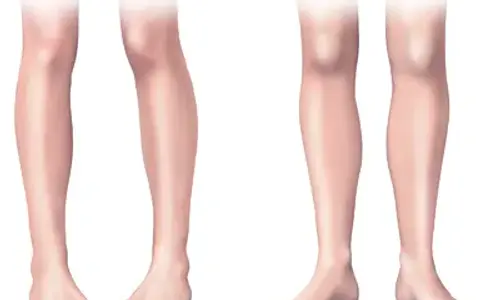
In-toeing is when the feet point inward during walking. Also called pigeon-toeing. Out-toeing is the opposite, where the feet point outward, sometimes called duck-walking. Both describe the angle of the foot relative to the direction of travel.
The twist can come from the foot itself, the shin, or the thigh rotating at the hip. Each source needs a slightly different approach. That is why a careful walking observation matters more than a static foot measurement alone.
Most cases in young children are developmental and correct themselves over time. The small group that does not, or that causes pain and frequent tripping, benefits from early attention while the gait pattern is still setting.
Age matters
In-toeing in kids vs adults
Most of what we see is in children. In adults, it usually shows up as residual patterns with joint strain. Tap a tab to see what fits.
What to look for in children
- Feet angle inward (pigeon-toed) or outward (duck-walking) when your child walks toward you.
- Your child trips over their own feet more than siblings or classmates their age.
- Your child prefers sitting in a 'W' shape on the floor, knees forward with feet out to the sides.
- Shoe soles wear unevenly: inside edge for in-toeing, outside edge for out-toeing.
- Kneecaps point inward or outward when your child stands with feet together.
- Running looks clumsy or different from other kids, with feet kicking in or out.
What it usually means at this age
Most in-toeing and out-toeing in young children traces back to how the leg rotates at the hip, thigh, or shin. A lot of mild cases are part of normal development and resolve on their own by age 7 or 8.
What changes the plan: pain, frequent tripping, a clear asymmetry between the two legs, or a family history of orthopedic issues. Those are the cases worth a proper assessment, even if the child is young.
How we approach it for kids
We start with a careful walking observation. How does each leg rotate? Is the foot itself contributing? Is there a flat arch underneath the gait pattern? A 3D scan maps the foot, and a short activity discussion covers sports, shoes, and daily walking.
If the gait responds to posture coaching alone, we start there. If foot-level support would help, we craft a custom insole designed for that specific rotation pattern. Follow-ups track change and we adjust as your child grows.
More about our kids programmeWhat to check in adults
- Standing relaxed, one or both feet visibly angle in or out, not straight ahead.
- Your two shoes wear down differently: one sole looks polished on the inside, the other on the outside.
- Hip, knee, or lower-back ache after long walks, with no clear injury to explain it.
- Walking in a straight line feels awkward, or you sometimes clip one ankle with the other foot.
- A photo of your footprints in sand or wet tile shows toes pointed sideways, not forward.
- You turn your feet out or in to climb stairs, instead of stepping straight up.
Why the story changes in adults
True in-toeing or out-toeing in adults is usually a residual pattern from childhood rather than a new condition. The hip or shin rotation that caused it has settled. The gait has been with the person for decades.
What matters in adults is not fixing the rotation but managing its effects. Knee, hip, or back strain from the altered gait is the most common reason adults come to us.
How we approach it for adults
The assessment looks at the whole kinetic chain. We map your foot, watch your gait, and check where strain is landing. Many adults with residual in-toeing also have mild flat feet or high arches that amplify the pattern.
A custom insole supports the foot at the right angle for your gait. The goal is not to make you walk differently. It is to let your body handle its natural walking pattern with less strain further up the leg.
See how a assessment works How we help
A stepped approach, not a one-size plan
Observation first. Coaching always. Insoles only when they earn their place.
-
Walking observation
We watch your child walk the way they normally do. We look at the hip, knee, shin, and foot — not just the feet.
-
Targeted support, if needed
Some cases respond to posture coaching alone. Others need a custom insole tuned to the rotation pattern. We only add what helps.
-
At-home coaching
We teach the parent specific cues to use during daily walking. The progress happens at home, not only in our session.
Progress timeline
How a typical case unfolds
Every child is different. These are the windows parents ask about most often.
- First session
Baseline and plan
Full walking observation, foot scan, and a discussion with parent and child. We agree on whether to start with coaching only, coaching plus support, or watchful waiting.
- 3 to 6 months
Walking pattern shifts
With consistent coaching and any recommended support, the walking pattern begins to shift. Parents often notice fewer trips and more natural-looking running.
- 12 months
Reassess and step down
Many children improve to the point where custom support is no longer needed. Those with persistent patterns continue with adjusted insoles. A small group gets referred to an orthopedic specialist.
Cases with sharp asymmetry, pain unusual for the age, or a family history of orthopedic conditions get referred to a specialist early. Our first job is to spot when that referral is needed.
Parent stories
How the walk changed, in their words
Real notes from families we have worked with on in-toeing and out-toeing.
Our daughter walked like a little duck since she was two. We thought she would grow out of it. At seven it was still there. The assessment showed mild support would help. Two terms later the duck-walk is mostly gone.
I was pigeon-toed as a child. As an adult runner, my left knee kept giving me trouble. The insole adjustments have not changed how I walk, but the knee pain after long runs is much less.
Watching your child walk and wondering if it is normal?
Our free parent checklist lists 12 signs to look for, plus a clear wait / track / book traffic light. No email needed to read it.
In-toeing FAQ
What parents ask us about pigeon-toed walking
Short, honest answers. A assessment gives the specific answer for your child.
Is in-toeing a serious problem?
Usually not in young children. Most cases trace back to the way the hip or shin rotates during growth, and many resolve on their own. A common worry: despite what people say, in-toeing and out-toeing alone do not cause arthritis later in life. What makes a case worth acting on is tripping, pain, a clear asymmetry between the two legs, or a pattern that has not improved by age 8.
My child is only 4. Will they grow out of it?
Many will. Mild in-toeing in children under 6 often improves as leg rotation settles. A foot assessment at this age is not about forcing a decision. It is about getting a clear picture so you know whether to watch, coach, or support.
Does in-toeing always need custom insoles or a brace?
No. For mild cases, posture coaching and patience are often enough. The American Academy of Pediatrics specifically warns against store-bought corrective shoes and night braces, since most children resolve without them. Custom insoles come in when there is an associated foot issue like flat feet, or when the gait is causing pain, falls, or strain on the knee and hip. It is not purely cosmetic, but it is also rarely urgent.
What causes in-toeing in the first place?
Three main sources. Internal tibial torsion, where the shin twists inward. Femoral anteversion, where the thigh rotates inward at the hip. Or metatarsus adductus, where the foot itself curves inward. Flat feet can also amplify the pattern. A walking observation usually tells us which is at play.
Can sports or stretching help?
They can, depending on the cause. Activities that encourage external rotation like skating, ballet, or certain martial arts can help some kids. Strengthening the hip rotator muscles also matters. We discuss this case by case so parents can pick what fits their child.
When should we see an orthopedic specialist instead?
We refer when there is sharp asymmetry between the legs, when only one leg is affected, when pain is unusual for the age, when the foot feels stiff or rigid, or when the pattern has not improved at all after 12 months of consistent coaching and support.
Related topics
Often connected to in-toeing
Still unsure?
A short assessment gives a clear answer
A quick WhatsApp message. We will suggest whether a session is worth booking.