
Flat Foot
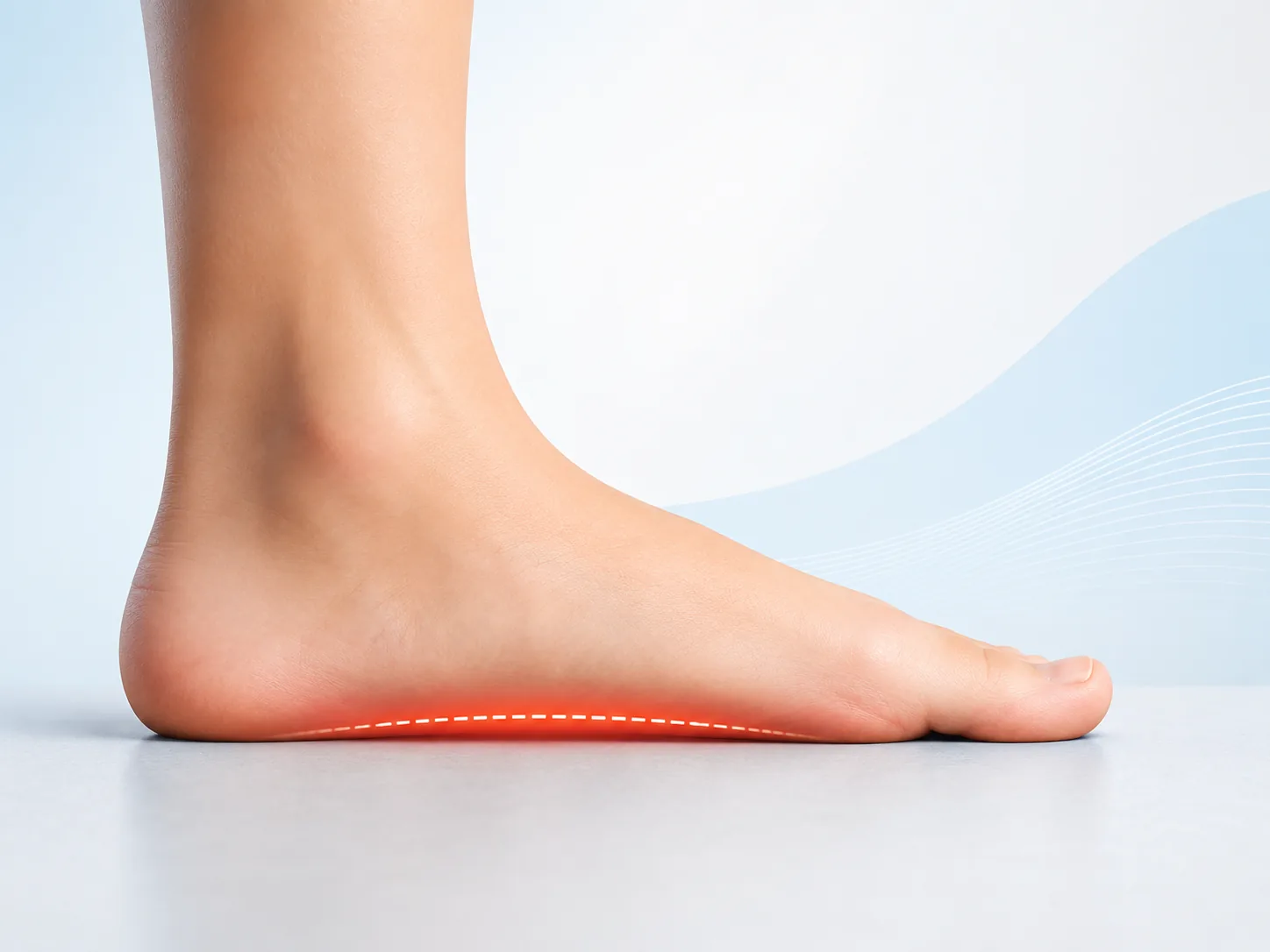
A fallen or low arch causing pain, posture problems, or uneven shoe wear. Common in growing kids, and a frequent cause of adult foot and back discomfort.
What flat foot really is
Most babies are born with flat feet. The arch typically starts developing from around age 5, though it varies — some children never develop a visible arch and remain perfectly healthy. When a low arch comes with pain, fatigue, or uneven shoe wear, it can shift weight onto parts of the foot that aren't built to carry it.
The result is foot pain, tired legs, knee or back ache, and uneven shoe wear. For active children it can show up as frequent tripping or refusing to walk. Custom support won't reshape the foot overnight, but it stops the chain reaction up the body and helps the arch develop where it still can.
Flat foot in kids vs adults
How flat foot shows up differs by age. Pick the tab that fits to see the at-home signs, why it matters, and what we do about it.
Structural signs of flat foot in children
- The inner arch disappears when your child stands, but comes back when they sit, tiptoe, or lift the foot off the floor (flexible flat foot).
- From behind, the heels tilt outward (valgus) instead of staying straight — most visible when barefoot on a hard floor.
- A wet footprint on the bathroom floor shows the whole sole, with little or no inward arch curve.
- The inner edges of school shoes are crushed flat or worn faster than the outer edges, often within months.
- The inner ankle bone looks more prominent on one or both sides than it does on flat-arched adults you know.
- Knees naturally turn inward (knock-knees) when standing — often paired with flexible flat feet.
Why flat-foot timing matters in kids
Most children are born with flat feet. The arch usually starts forming from around age 5 and continues developing into early teens. Some children never develop a visible arch and remain perfectly healthy — pain, fatigue, or visible heel tilt are what change the picture.
While the foot is still flexible, the arch responds best to consistent support. Once growth slows, the same support takes longer to make a difference.
How we approach it for kids
A paediatric foot assessment takes 20 to 30 minutes: 3D foot scan, walking observation, posture review with the parent present.
If arches would benefit from support, we craft a custom insole designed for a growing foot. Replacements are built in as your child's feet grow.
More about our kids programmeWhat to check in adults
- No visible arch on the inside of your foot when you stand barefoot on a hard floor.
- Inner ankle swelling or tenderness, especially after a full day standing.
- Looking at your foot from behind, you see more toes on the outer side than on the other foot.
- You cannot comfortably rise onto the toes of one foot while standing on it.
- The inside edges of your shoes are crushed inward or worn flat within a few months.
- Arch or inner-ankle pain that gets worse after walking, not better.
Why adult flat foot needs a different approach
In adults, flat foot is usually one of three things: a flexible arch that has been low since childhood, a fallen arch that has progressed gradually (often called posterior tibial tendon dysfunction, PTTD), or a rigid flat foot from arthritis or injury. The structure has set — an insole supports it but does not rebuild the arch.
Left unsupported, the inward roll (overpronation) loads the inner knee, the hip rotators, and the lower back. Most adult flat-foot complaints we see are not about the foot itself but the joints above it.
How we approach adult flat foot
The 20 to 30 minute assessment maps your specific arch height under load (standing, not sitting) and your gait pattern. We check for ankle tilt, big-toe push-off, and inner-knee tracking before designing.
Custom insoles include medial arch support sized to your actual collapse height, a heel cup to control inward tilt, and forefoot balance to keep push-off straight. Daily wear matters more than aggressive design.
See how an assessment worksWhat custom insoles do for flat feet
-
Spot it early
A child's arch often starts developing from around age 5. Some kids never develop a visible arch, and that's also healthy. Pain, tripping, or uneven shoe wear is what makes it worth checking.
-
3D scan, real shape
We scan one specific pair of feet, then design insoles that support exactly where the arch needs lift, no shoe-size templates.
-
Months, not minutes
Custom insoles work alongside walking posture coaching. Most parents see real change in three months of daily wear.
What parents and adults ask us
Will my child grow out of flat feet?
Many do. Flexible flat feet is common in children — arches often begin developing from around age 5, though some kids never develop a visible arch and remain healthy. The American Academy of Orthopaedic Surgeons notes flexible flat foot in children is usually painless and does not need treatment unless symptoms appear. Pain, frequent tripping, or fatigue is what changes the picture.
Are custom insoles really different from pharmacy ones?
Yes. Pharmacy insoles are template-based and shoe-size graded. Our insoles are designed from a 3D scan of one specific pair of feet, with arch support exactly where that foot needs it. The fit is the whole point.
Will insoles fix flat feet permanently?
Insoles support and align the foot. They are not a cure. For growing children, support during the 4 to 12 window often results in stronger natural development. For adults, insoles reduce pain and prevent compensatory issues.
Keep exploring
-
Children Feet Issues
In-toeing, out-toeing, growing pains. The full picture for kid foot development.
See children issues -
Sports & Performance
Active kids with flat feet often feel it during sport. Support helps with power transfer.
See sports support -
Book an assessment
20 to 30 minutes, RM99 launch price, in-store assessment.
See services
Book a foot assessment for flat feet
20 to 30 minutes. In-store at Kepong or Johor Bahru. WhatsApp to book.