
Forefoot Issues
Bunions, hammer toes, ball-of-foot pain, and toe deformities. When the front of the foot does more work than it should, support helps unload it.
The forefoot does a lot of work
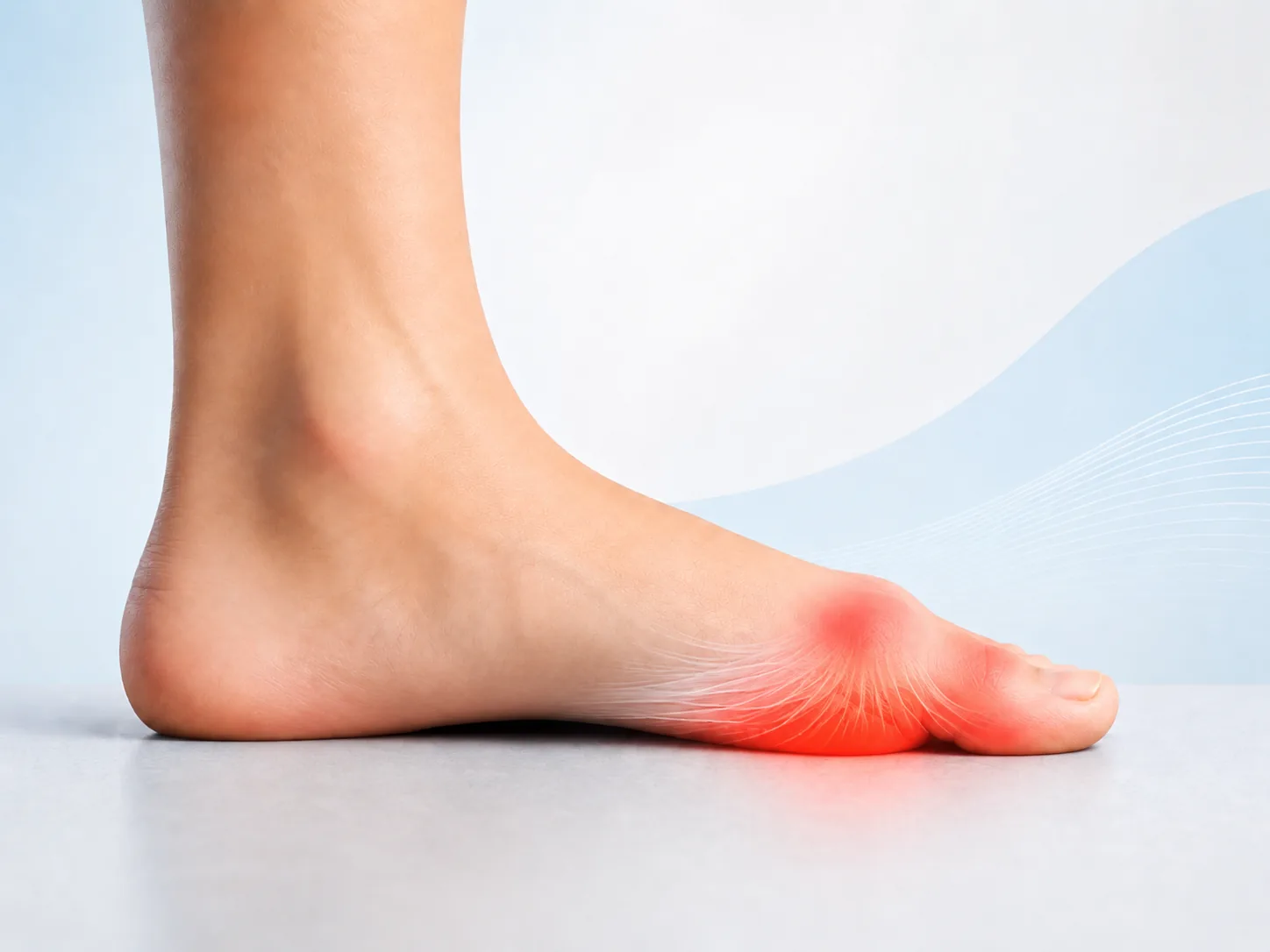
Every step, the front of your foot absorbs and pushes off your full body weight. When the structure changes — bunions, drooping toes, fallen metatarsal arch — that load lands in the wrong spots. Walking gets uncomfortable. Shoes start to hurt before you've left the house.
Custom insoles can't reshape bone, but they can change where pressure lands. A correctly placed metatarsal lift, toe-box support, and forefoot cushioning take load off the spots that hurt and spread it across the foot the way nature intended.
What goes wrong at the front of the foot
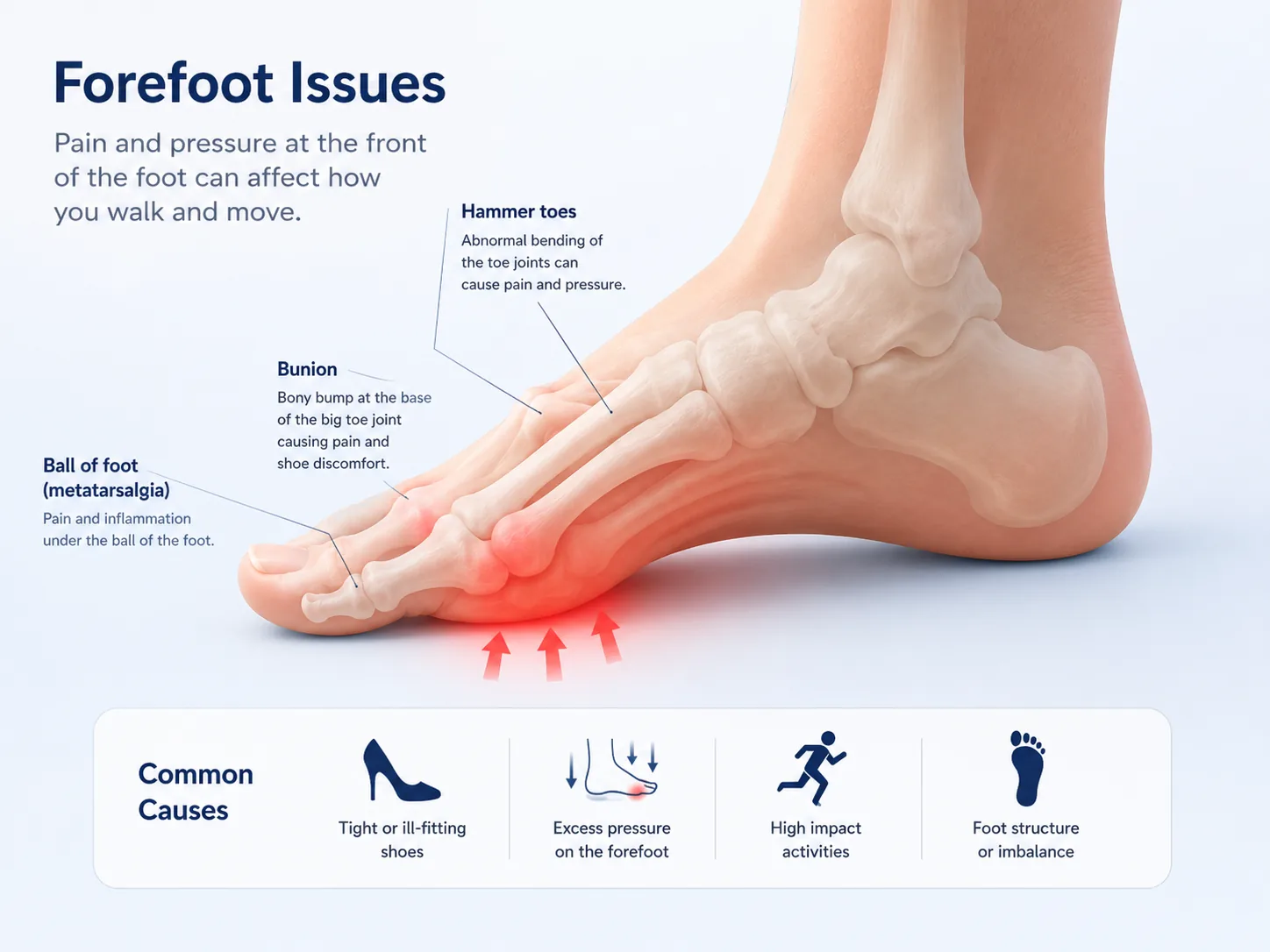
Three structural changes account for most forefoot pain we see. Each has different causes — and different ways an insole can help.
Forefoot problems in kids vs adults
The front of the foot complains in different ways at different ages. Tap a tab to see how it shows up.
What to look for in children
- Toes that visibly curl, hammer, or sit on top of each other when barefoot.
- Red marks, calluses, or pressure spots on the tops or tips of toes.
- Child says shoes feel tight at the front even when length is fine.
- Reluctance to wear closed-toe shoes; preference for sandals or going barefoot.
- Mild bunion-like bumps at the base of the big toe (less common in kids, but possible if there is a family history).
- Complaints of pain across the ball of the foot after running or jumping.
Why early support matters
Kid toe deformities are usually flexible — toes can still be moved into normal position by hand. This is the easiest window to influence shoe fit, toe space, and walking habits.
Hereditary bunions can start showing in late childhood. Early support does not cure them, but slows progression and reduces pressure.
How we approach it for kids
Assessment focuses on shoe fit, toe spread, and forefoot pressure during walking. We design insoles with a wider forefoot, soft cushioning, and a metatarsal lift where needed.
Coaching for parents on choosing shoes with adequate toe space matters as much as the insole itself.
More about our kids programmeForefoot signs in adults
- Bony bump at the base of the big toe; the big toe leans toward the second toe (bunion / hallux valgus).
- Burning, aching, or 'walking on a pebble' feeling at the ball of the foot.
- Toes that bend or curl downward and stay there (hammer toes, rigid in adults).
- Hard calluses on the ball of the foot or on the tops of the toes.
- Pain that worsens in narrow or high-heeled shoes.
- Numbness or tingling between the third and fourth toes (possible Morton's neuroma).
Why forefoot issues develop
Most adult forefoot problems are a combination of inherited foot shape, decades of shoe pressure, and changes in arch height over time.
Once the structure has changed, an insole cannot reverse it — but it can change where load lands and slow the progression. For severe bunions, surgery is sometimes the right answer; we will tell you when.
How we approach it for adults
Pressure mapping shows exactly where the forefoot is overloaded. Custom insoles with a metatarsal lift, toe-box cushioning, and arch support redistribute that load.
Daily relief is usually noticeable within weeks. We also advise on shoe choices that work with the insole, not against it.
See how an assessment worksThree common forefoot issues we treat
-
Bunions
Bony bump at the base of the big toe. Often hereditary, made worse by narrow shoes. Insoles redistribute load to slow progression.
-
Hammer & curly toes
Toes that bend or curl downward. Flexible in kids, can become rigid in adults. Toe-box support and cushioning reduce pressure points.
-
Ball-of-foot pain
Burning, aching, or "walking on a pebble" feeling. Metatarsal support spreads load across the forefoot instead of one spot.
What people ask about forefoot pain
Will an insole make my bunion go away?
No insole reverses a bunion. What it does is redistribute load away from the big toe joint, slow the progression, and reduce daily pain. For severe bunions, see a foot surgeon for diagnosis.
Are hammer toes in kids serious?
Flexible hammer toes in kids are common and often improve with proper-fit shoes plus toe space in custom insoles. Rigid hammer toes in adults are harder to fix without surgery, but support reduces pain.
What's the 'walking on a pebble' feeling?
Usually metatarsalgia or a Morton's neuroma. Both are forefoot conditions where pressure on the ball of the foot becomes painful. Custom insoles with metatarsal lift redistribute the load.
Keep exploring
-
Flat Foot
Low arches push extra load onto the forefoot. The two often go together.
See flat foot -
ill-Fitting Shoes
Narrow shoes are the biggest forefoot aggravator. Here's what to look for.
See shoe fit -
Book an assessment
We map exactly where the pressure lands and design support around it.
See services
Book a foot assessment for forefoot pain
20 to 30 minutes. In-store at Kepong or Johor Bahru. WhatsApp to book.