
Plantar Fasciitis & Heel Pain
That sharp pain in the heel with your first steps out of bed. Common in adults who stand for work, runners, and active kids in growth spurts.
Two main culprits, one approach
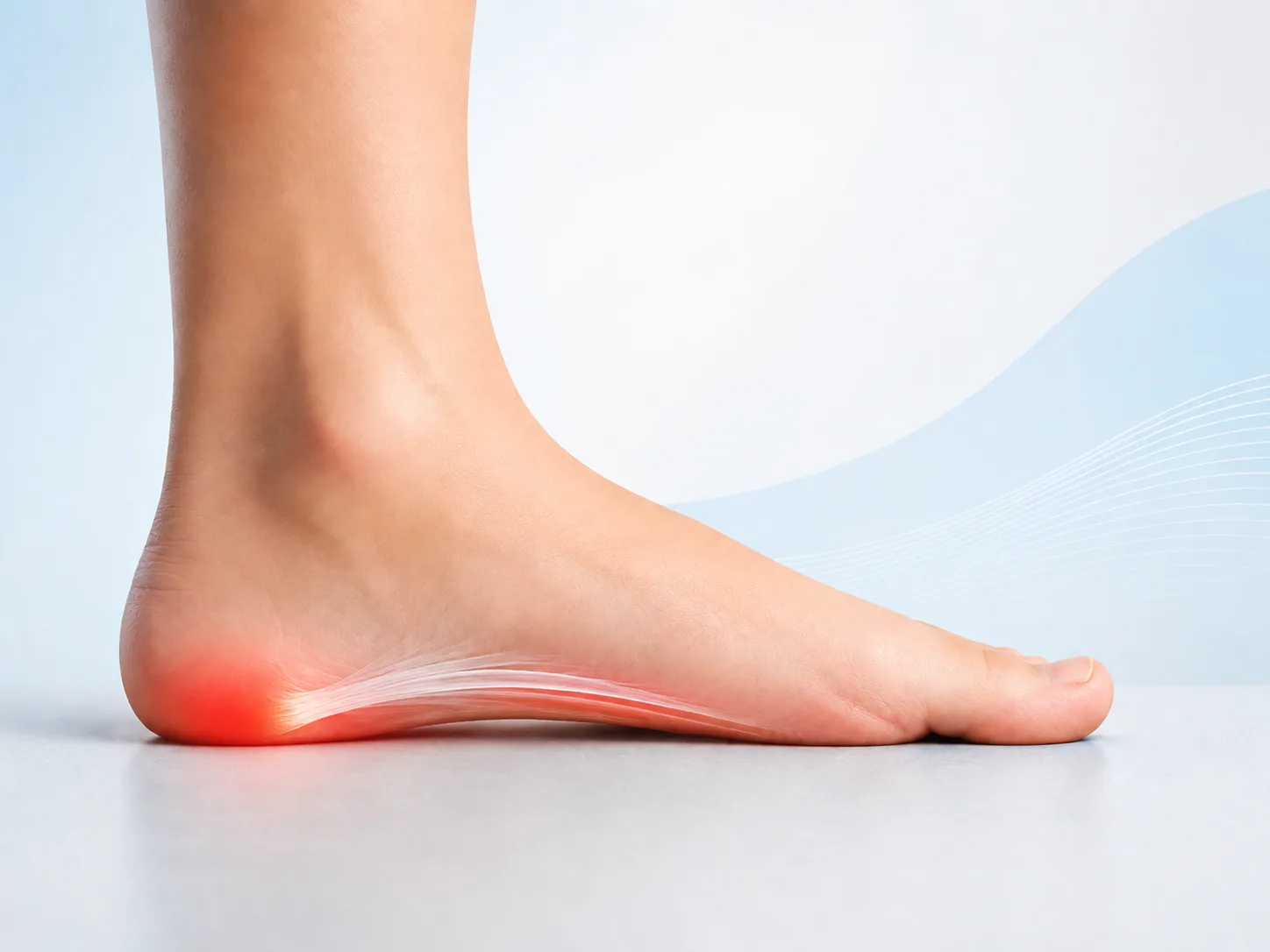
In adults, the most common cause of heel pain is plantar fasciitis — inflammation of the thick band of tissue running along the bottom of the foot. It hurts most in the morning, eases as you walk, then comes back after long rest.
In active kids — most often aged 9 to 14 during a growth spurt — heel pain is frequently Sever's disease, where the growth plate in the heel becomes irritated by repeated impact. It is not dangerous, but it hurts, and it cuts into sport. The growth plate normally fuses by around age 15, after which Sever's no longer occurs. Custom insoles help both conditions by cushioning impact and reducing strain on the arch.
Heel pain in kids vs adults
Heel pain in active kids and adults usually has different causes. The signs to spot at home are different too.
Sever's disease signs in children
- Heel pain that comes on during or after sport, especially running or jumping.
- Child limping for the first few steps after sitting, then walking it off.
- Pain when you gently squeeze the back of the heel from both sides.
- Tip-toe walking to avoid pressure on the heel.
- Most common in active kids aged 8 to 14 during growth spurts.
- Often appears in both heels but one may be worse.
Why it happens in growing kids
In children, heel pain is most often Sever's disease — inflammation of the growth plate at the back of the heel. It happens when the heel bone grows faster than the Achilles tendon can keep up.
It is not dangerous and usually resolves once growth slows. But during the active period, support and load management make a real difference to a child's daily life.
How we approach it for kids
We assess the foot scan, calf flexibility, and shoe wear pattern. Treatment usually combines a custom insole with a soft heel cushion, gentle calf stretching, and a temporary reduction in high-impact activity.
Most kids feel meaningful relief within 4 to 6 weeks of consistent wear.
More about our kids programmePlantar fasciitis signs in adults
- Sharp, stabbing heel pain with the first steps out of bed in the morning.
- Pain that eases after a few minutes of walking, then returns later in the day.
- Heel tenderness when you press the inside of the heel near the arch.
- Pain that flares after long periods of sitting, then standing up.
- Worse on hard surfaces, better on cushioned ones.
- Tight calves or a desk-bound lifestyle often present too.
Why adults get plantar fasciitis
The plantar fascia is a thick band of tissue running along the bottom of the foot. Repeated micro-stress at the heel attachment causes inflammation and pain.
Common contributors: long hours standing, sudden activity increases, flat feet or high arches, tight calves, unsupportive shoes, or weight gain.
How we approach it for adults
Custom insoles with arch support and a heel cushion redistribute load away from the inflamed area. Combined with calf stretching and shoe changes, most clients see significant relief within 6 to 12 weeks.
For stubborn cases lasting over 6 months, we refer to a sports physician or podiatrist for additional options.
See how an assessment worksWhat custom insoles do for heel pain
-
Worst in the morning
Plantar fasciitis pain is sharpest with the first few steps out of bed and after long sits. It eases when you keep moving, then returns.
-
Active kids 9–14
Children's heel pain after sport is often Sever's disease — irritation of the growth plate during a growth spurt. Different cause, similar feel. Both respond to support and rest.
-
Cushion + arch lift
Custom insoles distribute heel load and lift the arch. Less pull on the plantar fascia. Less impact on the growth plate.
What people ask about heel pain
What's the difference between plantar fasciitis and Sever's disease?
Both cause heel pain, but the cause is different. Plantar fasciitis (mostly adults) is inflammation of the band of tissue under the foot. Sever's (typically kids 9 to 14, during growth spurts) is irritation of the growth plate in the heel bone. Insoles help both by reducing impact and supporting the arch.
How long until heel pain goes away?
It varies by case. For Sever's disease, rest and treatment typically bring relief over 2 weeks to 2 months (Nemours KidsHealth). For plantar fasciitis, the American Academy of Family Physicians notes around 90% of patients improve with conservative care — rest, stretching, and orthotic support — over weeks to months. Severe or long-standing cases take longer. We follow up to keep you on track.
Do I need a doctor first?
For straightforward heel pain that started recently, an assessment is usually enough. For pain with swelling, numbness, or that wakes you at night, see a doctor first — those signs point to something else.
Keep exploring
Book a foot assessment for heel pain
20 to 30 minutes. In-store at Kepong or Johor Bahru. WhatsApp to book.