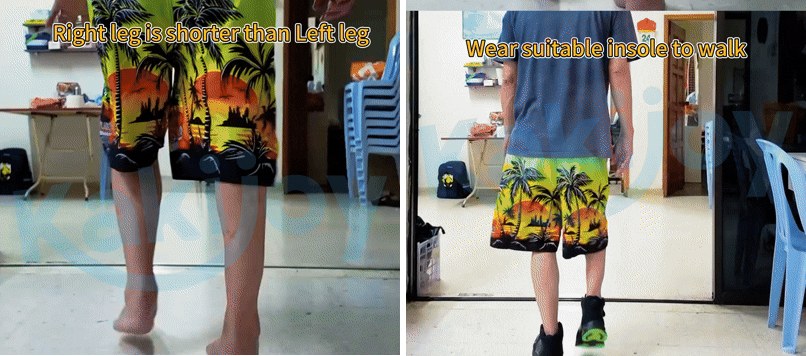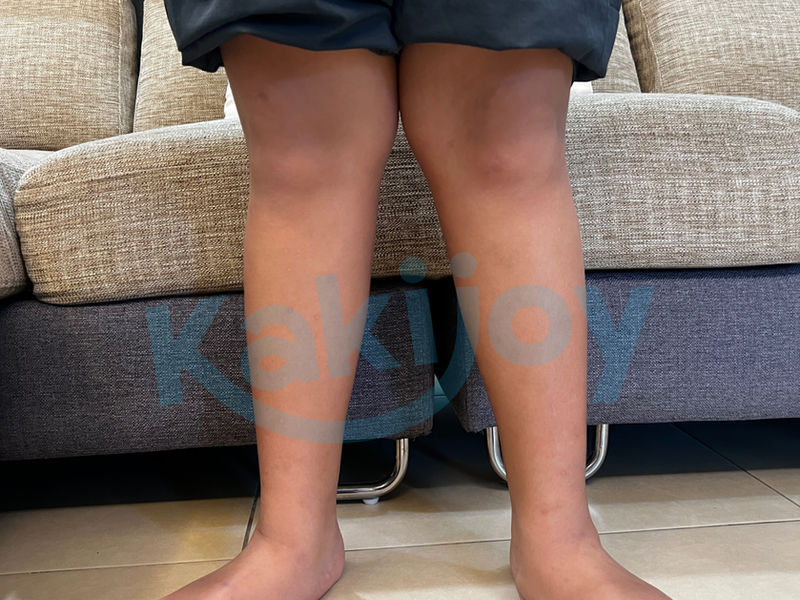
She walks between 10,000 and 18,000 steps a day. Most of those steps happen on tiled showroom floors, marble condo lobbies, and the slightly uneven driveways of terrace houses. On viewing days, she is in heels or flats for 9 hours straight, smile intact, legs quietly burning.
Her name is not Sarah. Everything else in this case is real.
The first visit
She came to us not because of her feet, but because of her knees. At 30, she had started dreading the back half of a double-viewing day. The pain started in the right arch, crept up the shin, and finished as a dull ache behind her right kneecap by 6 pm.
She had tried three sets of shoes from different stores. Each pair felt “okay for a week” and then went back to the same thing.
She mentioned, almost as a footnote, that she had been told as a child she had flat feet. Her mother had bought her orthotic insoles from a pharmacy. They had sat in a drawer.
At the assessment, three patterns jumped out:
- The arch of her right foot collapsed inward when she stood barefoot on our scanner.
- Looking at her feet from behind, more toes were visible on the outside of her right foot than the left. This is known as the “too-many-toes” sign.
- When asked to rise onto the toes of her right foot alone, she wobbled and gave up halfway.
None of these were dramatic on their own. Together, they told a consistent story.
What adult flat foot actually is
Flat feet in adults are different from flat feet in children. In kids, the arch is still forming and is usually flexible. In adults, flat feet are usually one of two things:
- Lifelong flat feet. The arch never formed strongly, and the foot has worked this way for decades. Often painless.
- Adult-acquired flat foot. The arch used to be higher, and it collapsed over time. The most common cause is wear on the posterior tibial tendon, the rope-like tendon that holds up the inner arch. This version tends to cause pain.
Sarah’s right foot looked like the second type. Her single-leg heel-raise test pointed directly at that tendon.
Why the knee was hurting, not the foot
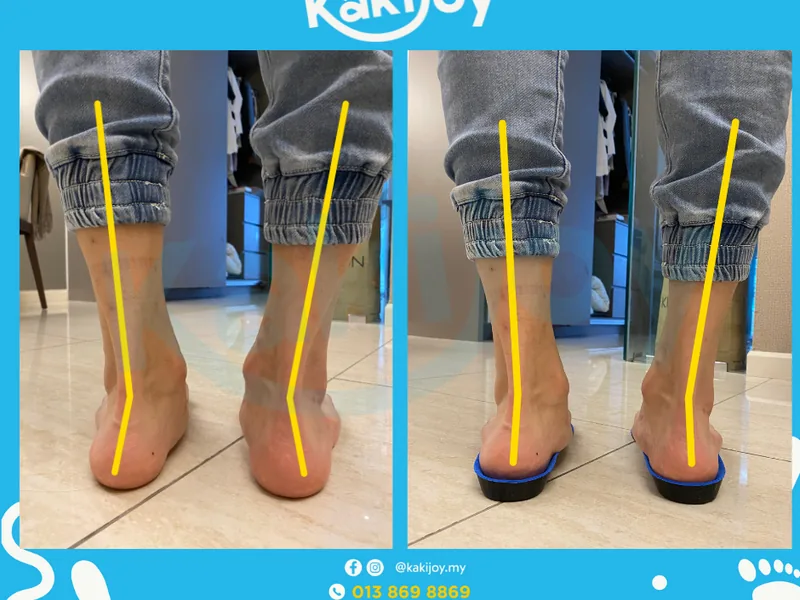
The chain is simple. The inner arch falls. The shin rotates slightly inward. The kneecap tracks off-centre as a result. Multiply by 14,000 steps a day on hard surfaces, and a knee that felt fine at 25 becomes an angry knee at 30.
This is why she had cycled through three pairs of shoes and found no fix. The shoes themselves were not the problem. The foot underneath was.
What we did
Step 1. Honest conversation.
We told her what we could and could not do. We could reduce the load on the posterior tibial tendon and realign the foot during walking. We could not undo the tendon wear that had already happened. If the pain was severe or the arch was collapsing quickly, we would refer her to an orthopedic specialist. Her case was moderate and was a reasonable fit for orthotic support plus calf and hip strengthening.
Step 2. Custom insole, built for her job.
Her insole priorities were different from an office worker’s. She needed:
- Firm medial arch support, to offload the tendon
- A heel cup that kept the heel vertical, not tilted inward
- A low enough profile to fit inside ladies’ low-block heels and flats, not just sports shoes
- Shock absorption for long stints on concrete and marble floors
We built two pairs. One for her work flats. One for her trainers, which she used for evening walks.
Step 3. Stretching and strength.
Three habits, about 5 minutes a day:
- Calf stretch against a wall, 30 seconds each side, morning and evening
- Single-leg balance on each foot for 30 seconds, during teeth brushing
- Heel raises, 2 sets of 15, after dinner
Step 4. A shoe audit.
We did not ask her to throw out any shoes. We did ask her to keep her flimsiest flats for short meetings only, and to build her long-viewing-day outfits around the two pairs fitted with insoles.
What happened
At 4 weeks, morning arch pain had dropped from an 8 out of 10 to a 3 out of 10. Knee ache at the end of viewing days was still there but much less sharp.
At 12 weeks, the morning pain was gone. The knee was pain-free on normal viewing days. On unusually long days (3 viewings, stairs, rainy weather) she felt mild fatigue but no sharp pain.
At 6 months, she was walking 15,000 to 18,000 steps a day with no pain in either foot or knee. Her insoles had visible wear on the arch side. We replaced them on schedule.
Key takeaways
- Adult flat feet are not the same as kid flat feet. When pain starts in adulthood, a wearing posterior tibial tendon is often the reason.
- The knee often hurts before the foot does. The arch collapses silently. The knee registers the consequence.
- Insoles reduce the load, they do not rebuild the arch. The support is ongoing, not temporary. Most people keep wearing insoles once they find ones that work.
- The right insole has to fit the job, not just the foot. A real estate agent, a teacher, and a tradesman need different builds even if their scans look similar.
Frequently asked questions
I have had flat feet since I was a kid. Why does it suddenly hurt at 30?
Usually because the load has gone up. New job, new baby, weight change, longer walking hours, harder floors. The foot that coped at 22 is not the same foot at 30 under different conditions.
Will my arch ever come back on its own?
Probably not, once an adult arch has collapsed. What can come back is pain-free walking, as long as the tendon is supported. Catching it early matters for how much support is eventually needed.
Do I need surgery?
Most adult flat-foot cases respond well to orthotics, footwear change, and strengthening. Surgery is reserved for severe or rapidly progressing collapse, and is decided by an orthopedic specialist, not by us. If your case looks like it needs that review, we will say so and refer you.
How long does a custom insole last for someone on their feet all day?
For a user on their feet 8 or more hours a day, a custom insole typically lasts 12 to 18 months before the support softens. Desk workers get longer. We do free comfort checks in between so wear is caught early.