
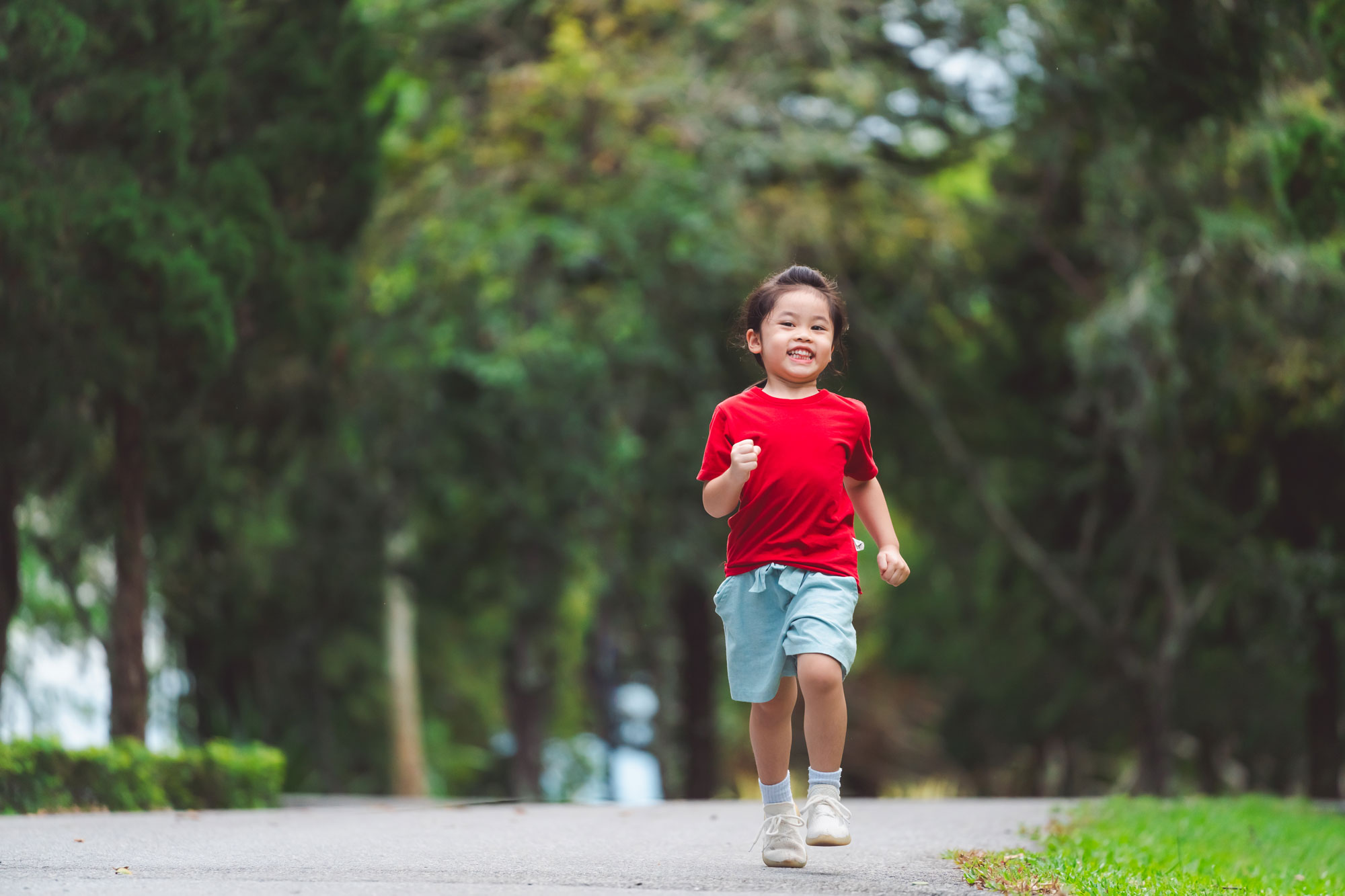
Every Malaysian parent knows this moment. Your child comes home from school, kicks off their shoes, and you notice the toe is curling up. Or there is a new blister on the heel. Or the sole is already peeling after four months. You just bought these shoes.
Kids’ feet grow fast. Between ages 3 and 5, they add roughly 0.75 cm per year. Between ages 6 and 11, about 0.5 cm per year. That means a shoe that fit perfectly in January can be too tight by May, and the child usually will not complain until the damage is done.
Here is how to pick the right school shoes, how to check the fit, and when poorly fitting shoes become more than a comfort issue.
The five things a good school shoe needs
Forget fashion for a moment. A well-fitting school shoe does five specific things.
1. Leaves room for growth at the toe. Press your thumb across the front of the shoe while your child is standing. There should be about a thumb’s width (roughly 1.3 cm) between the longest toe and the end of the shoe. Less than that, the child will outgrow it within a month. More than that, the foot slides and rubs.
2. Grips the heel firmly. Your child’s heel should not slip when they walk. Hold the shoe at the heel and squeeze the back. A good school shoe has a firm heel counter that does not collapse. This is what keeps the ankle stable during long school days and stair climbing.
3. Bends where the foot bends. Hold the shoe at the heel and the toe, and bend. It should flex at the ball of the foot (where the toes meet the sole), not in the middle. A shoe that folds in half like a taco offers no support. A shoe that will not bend at all is too stiff for a growing child.
4. Has a breathable upper. Malaysia is hot and humid. Synthetic plastic uppers trap sweat, which causes blisters, fungal infections, and odour. Look for leather, canvas, or mesh panels. Breathability matters more here than it does in cooler climates.
5. Has enough width, not just length. Many parents size up in length but forget width. If your child has a wider foot, the shoe should feel snug but not pinch across the top. Red marks or indentations after school are a sign the shoe is too narrow.
How to measure your child’s feet at home
You do not need a shoe shop to check the size. You need a piece of A4 paper, a pencil, and a ruler.
- Have your child stand on the paper with full weight on both feet. Standing matters. The foot flattens and lengthens under load.
- Trace around each foot with the pencil held straight up, not angled.
- Measure from the back of the heel to the tip of the longest toe (usually the big toe, sometimes the second toe).
- Add 1 cm to 1.3 cm to that number. That is your target shoe length.
- Always use the larger foot. Most people have one foot slightly bigger than the other.
Do this every 2 to 3 months. Children’s feet can grow half a size in that window without the child noticing.
The Malaysian school context
Two things make Malaysian school shoes different from the general advice you find online.
Colour rules. Since 2021, primary and secondary students can wear either white or black shoes, with socks matching the shoe colour. Both work fine for foot health. Black hides scuff marks. White is easier to check for cleanliness. Neither is better for feet.
Long walking and activity days. PJ class, recess running, school bus walking, co-curricular activities. Malaysian kids often wear the same pair of shoes for 7 to 9 hours a day. Cushioning and a well-structured heel matter more than they would for a child who only wears school shoes for 3 hours.
Wet weather. The monsoon means wet shoes drying overnight. Rotate two pairs if you can. A shoe that stays damp for days breeds bacteria and softens the sole faster.
Signs the shoes are the problem, not the child
Children rarely say “my shoes hurt.” They say “I don’t want to walk,” or they drag their feet, or they come home with a limp. Watch for:
- Blisters on the heel or side of the foot. The shoe is too big, too small, or too narrow.
- The child kicks the shoes off the second they get home. They have been uncomfortable all day.
- Wear marks on the inner edge of the sole. The foot may be rolling inward. Normal in some kids, but worth watching if paired with knee or leg pain.
- The child walks on the outer edge of the foot. A supination pattern, less common, and often missed.
- Toenails that are bruising. The shoe is too short. This is not a “grow into it” problem, this needs a new pair now.
When the shoe is not the real problem
Sometimes a parent tries three different shoe brands and the child still complains. In that case, the issue may be the foot itself, not the shoe.
Three patterns to look for:
- Flat feet. If the arch completely disappears when standing, and the child complains of tired legs after short walks, the shoe alone may not be enough. A flexible flat foot in a young child is often normal. A painful flat foot is worth assessing.
- In-toeing or out-toeing. If the child’s shoes always wear out on the same spot (inner front or outer heel), their gait may be the cause, not the shoe.
- Knee or hip pain. Poorly aligned feet can pull the knees inward and strain the hips. In older kids, this shows up as vague aches after PE class or stairs.
These are the patterns we look for during a KakiJoy foot scan. For many kids, the right shoe is all they need. For some, a custom insole inside a good school shoe is what solves the problem the shoe alone cannot.
You can read more about flat feet in children, in-toeing, and knee pain in kids if you are trying to decide whether to book an assessment.
Quick checklist before you buy
Take this to the shoe shop or save it on your phone.
- Thumb’s width of space at the toe
- Firm heel counter (squeeze and check)
- Bends at the ball of the foot, not the middle
- Breathable upper (leather, canvas, or mesh)
- Comfortable width, no pinching
- Both feet fitted, larger one prioritised
- Child walks in them for a minute in the shop before you decide
- Bring your child’s current insoles along if they use them
Buy shoes in the afternoon when the feet are slightly swollen from the day. A morning fitting can mislead you by half a size.
When to re-check
Mark your calendar. Every 2 to 3 months, do a quick thumb-test on the current shoes. Every 6 months, re-measure at home. At the start of each school term, budget for the possibility of a new pair even if the current ones look fine.
Kids’ feet are still forming until roughly age 18, but the biggest developmental window is between ages 4 and 12. The shoes they wear during those years shape how they stand, walk, and run for the rest of their lives.
If you are unsure whether your child’s shoe issue is a fit problem or a foot problem, book a free foot scan. Fifteen minutes with our 3D scanner usually answers the question.